CSSA 2026 successfully took place 7-8 September 2026 at the University of Cape Town. The event focused on Building resilience in an AI-everything world.
In today’s rapidly evolving landscape, organisations face unprecedented challenges and opportunities driven by artificial intelligence, global interdependencies, and diverse workforce dynamics.
The theme of building resilience in an AI-everything world, reflected on the urgent need for organisations to adapt and thrive in an environment where artificial intelligence permeates every aspect of business and society. It’s about creating systems, cultures, and leadership approaches that can withstand disruption and leverage AI as a strategic advantage.
The Cyber Security Symposium Africa (CSSA) therefore aimed to explore how organisations can build resilience by leveraging the strengths of a multi-generational workforce while navigating the complexities of an AI-driven world.
CSSA 2026 key focus areas
During CSSA 2026, we explored critical topics shaping the future of work and organisational resilience.
- AI and Technology: harnessing AI-driven solutions to enhance productivity and decision-making and managing the associated security risks.
- Cyber Resilience: anticipating, withstanding, responding to, and recovering from cyberattacks while maintaining core business functions in a world with ever evolving, more complex and unpredictable digital threats.
- Culture and Privacy: balancing transparency, trust, and data protection in a connected world, by building “cybersafe” through awareness, training, and practical security measures for organisations and people of all ages.
- Geopolitical and Supply Chain Risks: addressing geopolitical tensions that impact cybersecurity strategy, including cyber espionage and intellectual property theft.
- Regulatory and Compliance Challenges: staying ahead of shifting legal and ethical standards, as well as navigating the increasing fragmentation of cybersecurity regulations across different jurisdictions.
- People and Leadership: empowering leaders to foster adaptability to technological advances and inclusivity across generations. This includes fostering a community that spans across different ages, and sectors, such as IT, business, and the public and private sectors.
AI is no longer optional, instead it is embedded in every industry. Organisations that fail or delay to adapt risk operational fragility and reputational harm. CSSA 2026 brought together thought leaders, industry experts, and practitioners to share insights, strategies, and actionable frameworks for thriving in an era where resilience is the ultimate competitive advantage.
CSSA 2026 was proudly sponsored by

Topics presented at CSSA 2026
View our programme to see who presented online and in-person at CSSA 2026.
7 September 2026 | 8 September 2026 | |||
| 08:00 | Registration for CISCO workshop | 08:30 | Registration | |
| 08:30 to 11:30 | Workshop Sponsored by Cisco | 09:00 | Welcome | |
| 11:00 | Registration for CSSA (tea and light snacks on arrival) | 09:05 | From Innovation to Regulation: Rethinking Security in the Age of AI Professor Tshilidzi Marwala United Nations University | |
| 12:00 | Welcome | 09:50 | Brett Redman OSINT Industries | |
| 12:10 | Alignment risks and cybersecurity in the era of AI Associate Professor Jonathan Shock University of Cape Town | 10:20 | Sponsor: First Technology The Changing Cyber threat landscape affecting African Universities Lloyd Timcke Rubrik | |
| 12:55 | Forget about Cybersecurity Awareness – make all end-users Cybercrime fighters Professor Basie von Solms University of Johannesburg | 10:40 | TEA | |
| 13:40 | Sponsor: Cisco Securing the Agentic Era Mohammed Jagot | 11:20 | Terence Govender PhambiliIT Advisory Services | |
| 14:00 | TEA | 12:00 | Digital wounds Lukas van der Merwe CyberCom Africa | |
| 14:35 | Eleven Years Missing Peter Allwright Advantyx | 12:35 | Update on national cybersecurity structures & initiatives in SA Craig Rosewarne Wolfpack Information Risk | |
| 15:10 | Sponsor: Datacentrix AI Employees in the Workforce - Do we trust their LinkedIn Profiles Arno Hanekom | 13:05 | Sponsor: NTT Data & Cisco Sikhumbuzo Mthombeni & Garsen Naidu | |
| 15:35 | Generational Risks Associated with Cyber Related Crime Chad Thomas IRS Forensic Investigations | 13:25 | LUNCH | |
| 16:10 | People, Culture and AI: Keeping Humans in the Loop to Combat Cybercrime in an Intelligent Age Professor Kerry-Lynn Thomson Nelson Mandela University | 14:15 | Trustworthy Agentic Systems Thorsten Eisenhofer CISPA | |
| 16:45 | Beyond Key-Person Dependency: Training an AI “Intern” as a Force Multiplier for Solo Operators Wesley Phillip SAIAB | 14:50 | Responsible AI-Driven Cybersecurity Decision Support for African Organisations: Balancing Productivity, Automation, and Security Risk Dr. Olalekan Samuel Ogunleye University of Venda | |
| 17:10 | Closing proceedings | 15:20 | Sponsor presentation: Altron Securing the Agentic Enterprise: Cyber Resilience in the Age of AI Joseph Lumbahe | |
| 17:15 | Cocktail function | 15:45 | Brigadier Janine Steynberg Directorate for Priority Crime Investigation | |
| 16:20 | Prize giveaway | |||
| 16:30 | CSSA closing | |||
Patch me if you can
As part of the programme Cloudandthings also hosted Patch me if you can. This simulation flipped the traditional security demo on its head.
Participants were not the attacker but the last engineer standing. An AI bot actively attacked a live web application, using nothing more than requests the application was designed to accept. No scripted exploits. No obvious alarms. Just their own front door turned against them.
With only business logs, a network map, and commit access, participants had to piece together the attack, identify the vulnerability, patch the real source code, and redeploy.
The theme for CSSA 2026 reflects the urgent need for organisations to adapt and thrive in an environment where artificial intelligence permeates every aspect of business and society. It’s about creating systems, cultures, and leadership approaches that can withstand disruption and leverage AI as a strategic advantage.
Furthermore, it highlights that organisations' workforce is multi-generational. It is therefore important that strategies are put in place that acknowledges and accommodates each generations' approach to work and managing information and cybersecurity.
Speaker line-up
Professor Tshilidzi Marwala

Professor Marwala is the Rector of the United Nations University and an Under-Secretary-General of the United Nations. He previously served as Vice-Chancellor of the University of Johannesburg. He holds a PhD from the University of Cambridge and a Master’s in Mechanical Engineering from the University of Pretoria. His research applies artificial intelligence across disciplines, including engineering, economics, finance, medicine, and social science. Prof. Marwala is a member of the UN Secretary-General’s Scientific Advisory Board and the author of over 30 books and co-holder of five patents. He is, inter alia, a Fellow of the American Academy of Arts and Sciences, the World Academy of Sciences, the Academy of Science of South Africa, and the African Academy of Sciences, and a Member of the Chinese Academy of Sciences.
Professor Marwala's keynote will explore how artificial intelligence is reshaping our societies, bringing new opportunities to tackle global challenges. It will consider how AI can strengthen our ability to detect and respond to security threats, as well as the unprecedented challenges it presents through its growing use. The address will examine the key role of international cooperation in shaping this transformation and the role of the United Nations in establishing responsible and inclusive AI governance to ensure AI's benefits are distributed equitably.

Associate Professor Jonathan Shock
Jonathan is an Associate Professor in the Department of Maths and Applied Maths at the University of Cape Town, from where he also directs the UCT AI Initiative. He is also an Adjunct Professor at INRS Montréal.
His work spans theoretical physics, reinforcement learning, and computational neuroscience, with a focus on understanding intelligence as a dynamical and physical process. He is particularly interested in reinforcement learning, multi-agent systems, and theory-driven AI for science. Most of his research explores how mathematical structure — from statistical mechanics to dynamical systems — can inform the design and analysis of learning systems.
Jonathan completed his PhD at the University of Southampton in 2005 on applications of string theory to quantum chromodynamics, followed by postdoctoral appointments in Beijing, Santiago de Compostela, and Munich before joining UCT in 2013.
He supervises across mathematics, machine learning, and interdisciplinary AI, and is deeply committed to teaching and building research capacity. Outside academia, he cooks, photographs, exercises and reads.
Sourced from https://shocklab.net/

Professor Basie von Solms
Prof SH (Basie) von Solms is a Research Professor in the Academy for Computer Science and Software Engineering at the University of Johannesburg and is attached to UJ’s Centre for Cyber Security.
He is an Associate Director of the Global Cybersecurity Capacity Centre of the University of Oxford in the UK. Basie had also been a member of the World Economic Forum’s Global Future Council for Cyber Security and is presently a member of the WEF's Expert Cyber Group. In 2024 he was rated by ScholarGPS as one of the top 5 cybersecurity researchers in the world.
Prof von Solms is a Past President of IFIP, the International Federation for Information Processing (www.ifip.org). He is a a Chartered Information Technology Professional (CITP) and a Member of The Academy of Science of South Africa, as well as a Fellow of the
- Institute for IT Professionals (IITP) of South Africa
- British Computer Society
- Oxford Martin School of the University of Oxford
Chad Thomas

Chad Thomas is the Chief Executive Officer of IRS Forensic Investigations, an independent financial and organised crimes investigation company.
Chad holds a post graduate certificate in International Criminal Law from the Mandela Institute at the Wits School of Law, post graduate certificate in Media Law from the Mandela Institute at the Wits School of Law, certificate in Corporate Fraud Management from the South African Institute of Corporate Fraud Management, various courses in combating fraud and corruption from the University of Pretoria, has completed the Corporate and Ethics Governance program at the University of Pretoria, and has been published in the journals of the ACFE, SAIGA and SAIT.
Chad was previously the GM of Stallion Investigations, a division of the Stallion Security Group. Prior to that, Chad was employed as head of investigations for BoE Private Bank (insurance and FG division t/a Nsureline), and before that head of security at Standard Bank Property Fund Managers.
Chad served in an investigation and intelligence capacity in the permanent force of the South African National Defence Force until the end of 1994 and remained an active member of the Reserve Force until 2008.
Chad is a 34 year veteran of security and law enforcement in South Africa. He is the recipient of the security industry’s 2019 bravery award, as well the security industry gold medal for bravery awarded in 1998. He was nominated for the Mail & Guardian Driver’s of Change Award, and has received awards from the SAPS Crime Intelligence and Hawks for successes in joint organised crime investigations.
Chad was the host of the radio show “Corruption Busters” which won the Best Daytime Radio Show (Community) in South Africa award in 2017 and is a regular crime commentator on television news, radio and in the print media.
Peter Allwright
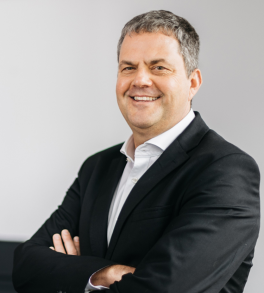
Peter Allwright brings over two decades of global forensic expertise to the fight against financial crime, corporate fraud, and organised criminal networks. With a career spanning Africa, Asia, Europe, and the Crown Dependencies, Peter has led high-stakes investigations involving government corruption, cybercrime, illicit financial flows, and cross-border asset concealment.
An internationally recognised forensic investigator, Peter has testified in complex, politically sensitive, and multi-jurisdictional matters. His work has supported law enforcement, regulators, and legal teams in some of the most challenging and high-risk environments worldwide.
Peter’s career has not been without danger. He is no stranger to personal risk, having been detained, arrested, poisoned, and physically assaulted in the course of his work. His investigations have drawn the ire of corrupt officials, criminal syndicates, and state-linked actors, necessitating periods of living and operating under the protection of close security teams.
Peter leads a global team specialising in high-value forensics. He is a trusted advisor to law firms, financial institutions, insurers, and regulators worldwide.

Kerry-Lynn Thomson
A Professor and Director of the School of IT at the Nelson Mandela University, a National Research Foundation (NRF) C2-rated researcher and the Chair of the national IITPSA Special Interest Group in Cybersecurity (SIGCyber). Kerry-Lynn is a Professional Member of the IITPSA and a committee member for the Eastern Cape Chapter. She is also a senior instructor in the Cisco Networking Academy Program at the Nelson Mandela University Cisco Academy. Kerry-Lynn’s research focus is interdisciplinary and includes cybersecurity, cybersecurity awareness and education, corporate culture and the human aspects of information assurance. Kerry-Lynn has published and presented over 45 journal and conference papers.
Terence Govender

Terence Commenced his career in Networking as a consultant with then qualifications in Novell and Microsoft as a Systems Engineer. He later progressed to management and held roles of Head of IT, Chief Technology Officer and Chief Information Officer for some blue-chip listed organizations such as Sun International, Discovery Health and Zurich Insurance. Terence is currently a Pr. CIO and Senior Director of Engineering – heading up Cyber, Risk and Compliance. Previously, he was a partner in a boutique firm heading Cyber Security and GRC. He is also a board member of the IITPSA and the Deputy Chair of the Western Cape Chapter.
Due to his passion for human development and wanting to make a difference in the lives of others, he also co-founded a business that helps other businesses manage People Change in large and/or complex technology systems adoption including but not limited to digital transition. Terence is not only technically inclined but also equipped with an MBA from Oxford Brookes University, Post grad in Advanced Strategy from UNISA, in addition to TOGAF, ITIL and COBIT Certifications.

Brigadier Janine Steynberg
Brigadier Janine Steynberg is a distinguished officer in the South African Police Service (SAPS), with a career spanning over three decades. Joining SAPS in 1990 as a line function police officer, she qualified as a detective in 1996, specialising in fraud investigation. After transitioning to commissioned officer roles, she held various command positions before shifting her focus to cybercrime investigation in 2011. As a pioneer in this field, Brigadier Steynberg became the first online investigator in SAPS and established a dedicated capacity for online investigation using Open Source Intelligence within the Directorate for Priority Crime Investigation. Currently, she serves as the Provincial Commander for Priority Crime Specialised Investigation in the Western Cape, overseeing cybercrime, financial investigation, and asset forfeiture and recovery. Brigadier Steynberg holds multiple certifications, including Certified Ethical Hacking, and earned her National Diploma in Policing in 2023, formalising her extensive expertise in law enforcement and specialised investigations.
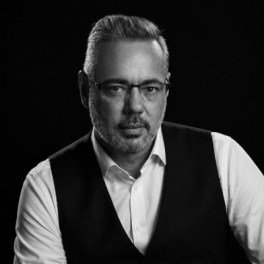
Lukas van der Merwe
As Senior Manager for Cyber Security Sales and Client Development at Cyanre Family of Companies, Lukas focuses on cyber incident response, digital forensics, cyber resilience, and executive engagement during high-pressure incidents.
With a background spanning ICT, preventative security, B2B engagement, and first response, he works at the intersection of technical response, business impact, legal exposure, and leadership decision-making.
He is also a speaker and thought leader on the human impact of cyber incidents, including his “Digital Wounds” work, which explores the psychological and organisational scars left by cyber attacks.
Wesley Phillip

Wesley is the IT Systems Manager at the South African Institute for Aquatic Biodiversity (SAIAB), a national facility of the National Research Foundation (NRF). Bringing nearly two decades of multi-vendor network engineering and systems administration experience across campus, educational, and enterprise environments, he manages SAIAB's complete technical spectrum - ranging from desktop support and end-user services to clusters, networks, firewalls, and power resilience. Navigating the daily realities of solo IT operations, his focus is on building functional, economical, and sustainable systems that deliver high operational integrity without unnecessary overhead.
Combining a software development background with CompTIA and other industry certifications, he has always leaned towards scripting and other forms of automation to reduce administrative burden and risk of human error. Since late 2022, he has focused on exploring and understanding how AI can transform IT operations, including learning how to effectively communicate, understand model capabilities, and master productive human-AI dialogue.
He is passionate about cyber resilience, pragmatic AI adoption, community tech outreach, and the leadership philosophy of "making oneself replaceable." By transforming routine maintenance and governance reporting into automated side-effects of daily operations, he advocates for empowering IT professionals to build sustainable IT environments, eliminate operational lock-in, and free themselves to pivot toward high-impact strategic initiatives.
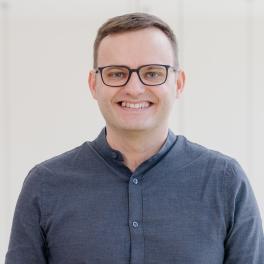
Thorsten Eisenhofer
Thorsten is a tenure-track faculty member at CISPA Helmholtz Center for Information Security in Saarbrücken, Germany. He previously worked as a postdoctoral researcher at BIFOLD and TU Berlin and earned his PhD from Ruhr University Bochum, where he was part of the Cluster of Excellence CASA. His research focuses on machine learning and computer security, particularly on attacks against learning-based models and defenses to improve their robustness. This work often involves looking beyond the model itself and examining the entire computational pipeline, including the underlying hardware and software stack.
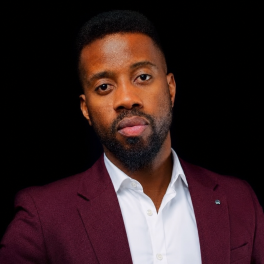
Joseph Lumbahe
Joseph is an AI strategist, technology executive and engineer working at the intersection of artificial intelligence, cybersecurity, enterprise transformation, and Africa’s digital future. With more than a decade of experience spanning software engineering, AI architecture, consulting and strategic leadership, he has built and scaled enterprise-grade AI systems across multiple industries and international markets.
As Head of AI Practice at Altron Digital Business, Joseph leads the organisation’s Microsoft AI Practice capability and helps shape its enterprise AI strategy, with a particular focus on advanced AI, Agentic AI, responsible adoption and the infrastructure required to operationalise AI at scale. His work is closely aligned with Altron’s AI Factory ambitions and the broader challenge of building sovereign, secure and resilient AI ecosystems for Africa.
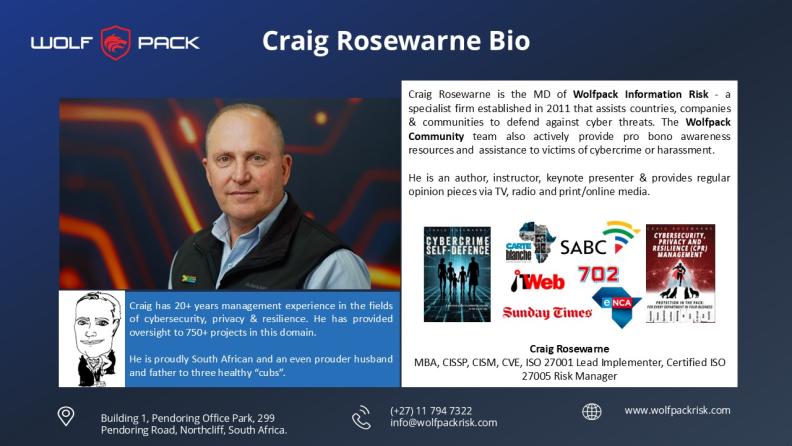

Sikhumbuzo Mthombeni
Sikhumbuzo is a Senior Security Practice Solutions Manager at NTT DATA, based in Cape Town, South Africa. A former University of Cape Town (UCT) student, he is an experienced cybersecurity professional who helps organisations strengthen their security posture through strategic advisory, security transformation, and the implementation of modern cyber resilience solutions.
His expertise spans Security Operations (SecOps), Identity and Privileged Access Management (PAM), cloud security, network security, and risk management. He is passionate about helping organizations leverage automation, AI-driven security capabilities, and integrated security platforms to improve their security outcomes and manage evolving cyber threats.
Passionate about innovation, he is particularly focused on AI-driven security, automation, and helping organizations build resilient, modern security operations. Outside of work, Sikhumbuzo enjoys football, trail running, cycling, and mountain biking, and values continuous learning and personal growth.
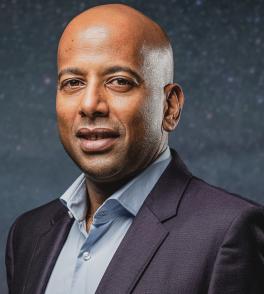
Garsen Naidu
Garsen Naidu is a senior technology sales and AI strategy leader with over 20 years of experience across EMEA and Africa. At Cisco, he leads Cloud and AI growth across the Middle East, Africa, Turkiye, Romania, and CIS, and is building Cisco's pan-EMEA Sovereign AI go-to-market strategy from the ground up. A strong advocate for AI business value selling, Garsen combines a background in Electrical Engineering and an MBA to bring both technical credibility and commercial impact to the AI conversation.
Mohammed Jagot
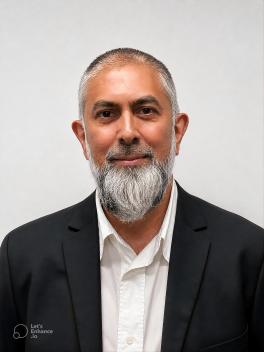
Mohammed is a Cybersecurity Architecture Specialist at Cisco Systems with a career in the technology sector spanning over three decades. He began his journey in 1995 as a software developer, gaining foundational expertise in software engineering and systems design, before transitioning into enterprise systems engineering and presales architecture. Since January 2026, he has served as an Account Executive for Architecture, focusing on strategic enterprise cybersecurity advisory across South Africa.
Guided by a "listen-first" philosophy and a commitment to continuous learning, Mohammed bridges deep engineering heritage with pragmatic enterprise security strategy. He collaborates with leading private and public sector organizations to build resilient, Zero Trust security architectures capable of defending complex hybrid environments.

Lloyd Timcke
Lloyd is a senior technology and cybersecurity leader with extensive experience helping organisations across Africa strengthen their cyber resilience, data protection and IT strategies. He specialises in navigating the evolving cybersecurity landscape, with a particular focus on data security, identity resilience, cloud and application protection.
Lloyd is passionate about helping business and technology leaders understand the impact of cyber risk at an executive level and develop practical strategies to ensure business continuity and rapid recovery. He regularly engages with CIOs, CISOs and senior leadership teams on emerging cyber threats, resilience and the protection of critical business operations.
With a strong focus on innovation and customer outcomes, Lloyd works closely with organisations to turn cybersecurity challenges into opportunities to build more resilient, secure and future-ready businesses.

Arno Hanekom
Arno is a Senior Solutions Consultant at Datacentrix, where he leads Data & AI solution strategy and works with executive and technical teams to translate emerging technologies into practical, secure and commercially relevant business solutions. His career spans digital transformation, enterprise architecture, software engineering, cloud platforms, data architecture, automation, IoT and robotics. Over the course of his career, Arno has designed and led complex technology initiatives ranging from automated forensic and laboratory environments to industrial IoT platforms, global software applications, cloud migrations and enterprise data solutions. This experience has given him a particularly practical perspective on the intersection between people, intelligent systems, operational risk and technology adoption. Arno holds a Master’s degree awarded cum laude, with a background in bioinformatics and computational systems biology. He has also lectured in advanced scientific and computational disciplines and has presented at more than 30 national and international conferences and symposiums. Today, his focus is on helping organisations move beyond AI experimentation towards trusted, governed and resilient AI capabilities.